Moverse por la ciudad
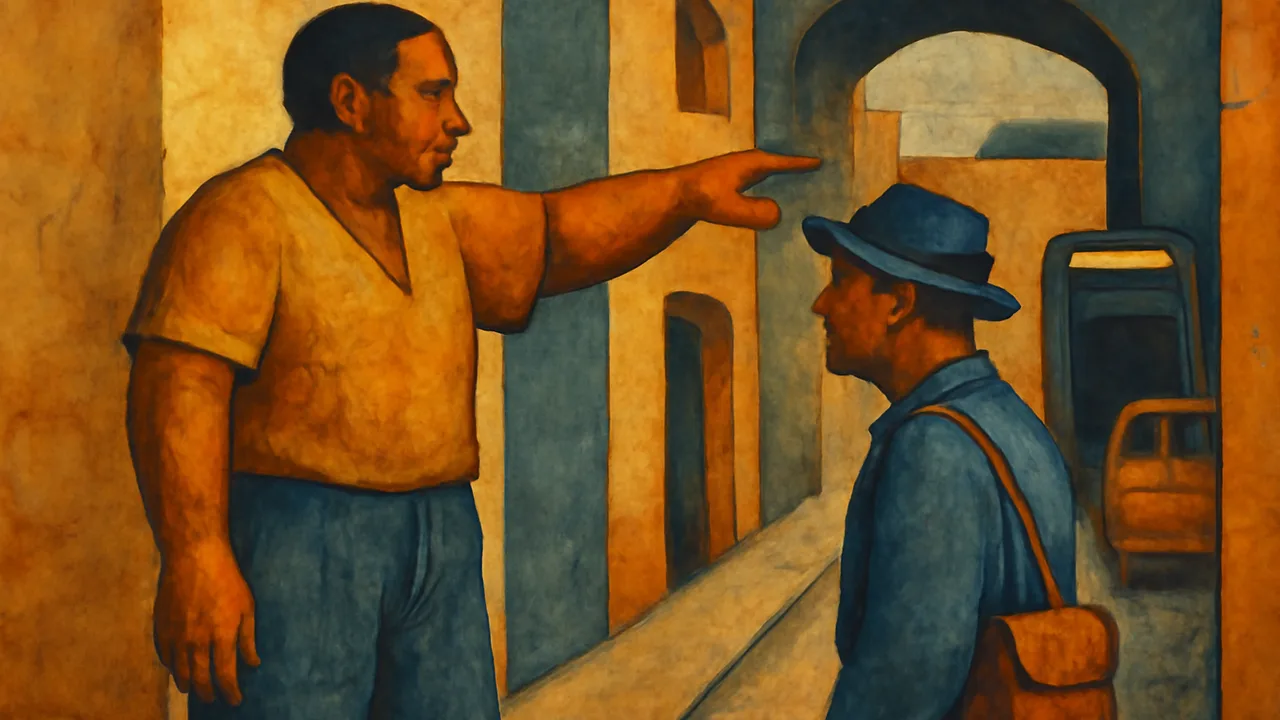
Finding your way around a Spanish-speaking city — directions, transport, and the essential phrases.
Asking for directions
| Español | English |
|---|---|
| ¿Dónde está…? | Where is…? |
| Estoy buscando… | I'm looking for… |
| ¿Está lejos? | Is it far? |
| Está cerca. | It's close. |
| A la izquierda | On the left |
| A la derecha | On the right |
| Todo recto / Derecho | Straight ahead |
| En la esquina | At the corner |
| La primera calle | The first street |
| La segunda calle | The second street |
Transport
| Español | English |
|---|---|
| el metro | the metro |
| el autobús / el bus | the bus |
| el taxi | the taxi |
| un boleto / un billete | a ticket |
| ida y vuelta | round trip |
| solo ida | one way |
| la estación | the station |
| la parada | the stop |
| el aeropuerto | the airport |
Sample dialogue
— Disculpe, ¿dónde está la estación de metro? — Siga todo recto y luego gire a la derecha. Está a dos calles. — Muchas gracias. — De nada.
Check your understanding
Answer the questions below to mark this chapter as read.
How do you ask "Where is the station?" in Spanish?
"A la izquierda" means ___.
What is "round trip" in Spanish?
"Todo recto" means ___.
Complete: Estoy ___ la estación.
"La parada" means ___ in English.